ESM — Embodied Stress Management
Regain calm—while stress is happening.
Embodied Stress Management (ESM) teaches discreet micromovements you can use in real time to interrupt stress and think clearly under pressure.
register below if you’re interested in a free online workshop ‘introduction to ESM’, or in ESM instructor training
LIVE. PRACTICAL. NO EXPERIENCE REQUIRED.
Why this method exists
Stress doesn’t wait for later. It shows up mid-meeting, mid-conversation, mid-decision, when clarity matters most.
Most stress tools are designed for before or after the moment.
This is a method you can use during real situations, without stopping what you’re doing.
What you’ll learn
Embodied Stress Management (ESM) is a practitioner‑developed, body‑based approach to real-time stress regulation. In the introductory workshop, you’ll learn
How stress shows up physically before you’re consciously aware of it
How simple micromovements can interrupt stress responses in seconds - and you’ll get to practice a micromovement for yourself
How to apply these techniques discreetly during work, conversations, or performance situations
No apps. No rituals. Nothing visible to others.
What People Typically Notice
Faster recovery under pressure — regain cognitive bandwidth in seconds
More emotional steadiness in tense moments — respond, don’t react
Clearer thinking and decision-making
More options, less tunnel vision
Less jaw, neck, and shoulder bracing
Many people feel a shift within seconds.

How it works
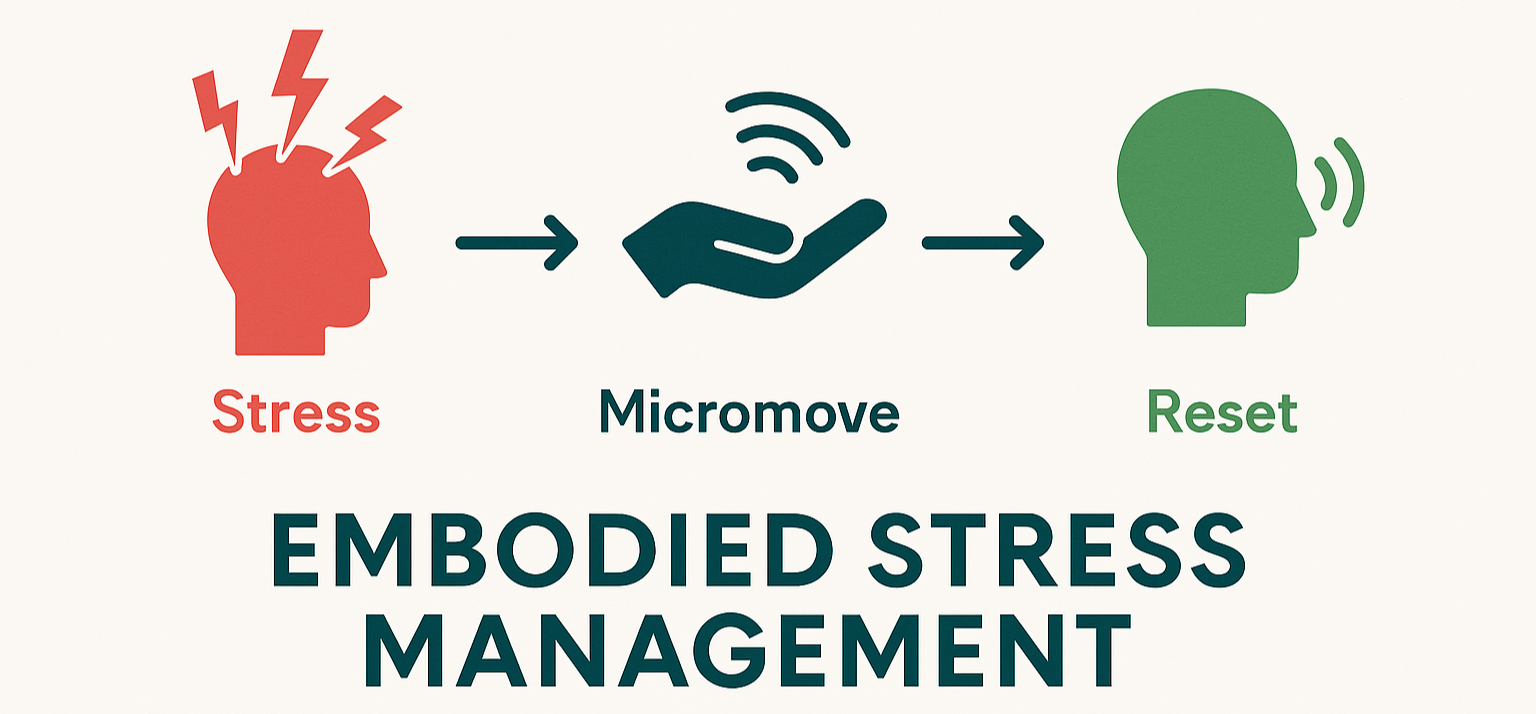
During the introductory workshop, we’ll examine the ESM process:
Notice a stress signal: held breath, jaw tension, rushing
Apply a micromove: a subtle tongue, eye, or hand pattern matched to context
Sense the reset: easier breathing, reduced bracing, clearer next step
Each micromovement takes a few days to integrate and the effect gets stronger with practice.
Who is it for?
Leaders and knowledge workers under constant cognitive load
Performers and athletes who need to perform under pressure
Anyone navigating stressful or conflict-heavy situations
Scientific basis
ESM draws on established research showing that:
Embodied practices can reduce stress responses and support cognitive function
Interoceptive awareness improves emotional regulation
Gentle somatic movement can reduce unnecessary muscular co-contraction and lower blood pressure
For a summary of relevant research and sources, please follow this link.
About the Instructor
Embodied Stress Management was developed by Konrad Wiesendanger, a Swiss therapist, Feldenkrais Method practitioner, workplace design expert, and coach with decades of experience working at the intersection of stress, embodiment, and performance.
FAQ
Is this therapy or mindfulness? Neither. It’s applied embodied skill training for real-world situations.
Will anyone see me doing it? No. Micromoves are designed to be discreet and usable in meetings.
How long until I feel something? Often within just a few seconds to half a minute—lighter breath, less bracing, clearer next step.
Do I need to practice daily? Repetition helps, but once a new micromove has been integrated, the emphasis is on‑the‑spot use. While it normally takes 10-20 hours (spread over 2-3 months) to become proficient at ESM, the technique can already be applied from the very first session.
Register here for our next free ESM introductory webinar
or for ESM instructor training
led by Konrad Wiesendanger, inventor of ESM
ESM instructor training will take place in Amsterdam November 28th to 30th 2026